Wild, wild backyard…
15 Ott 2013
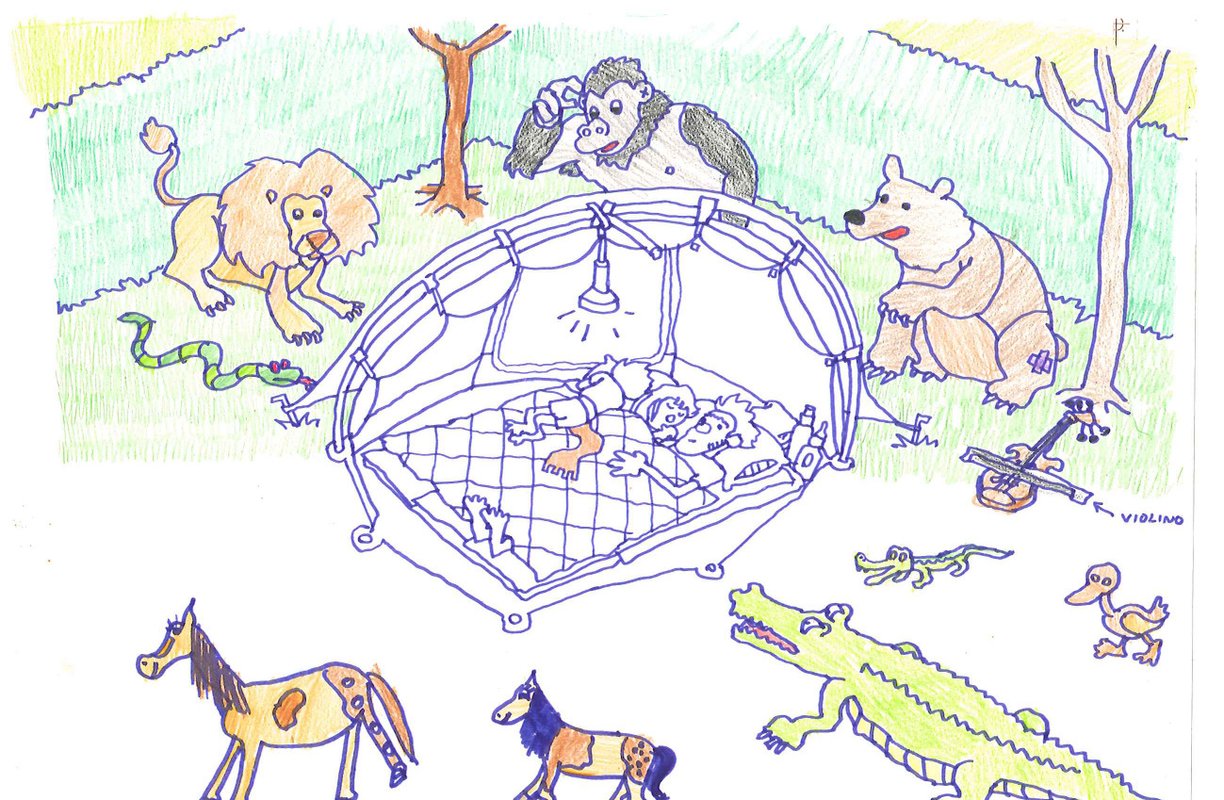
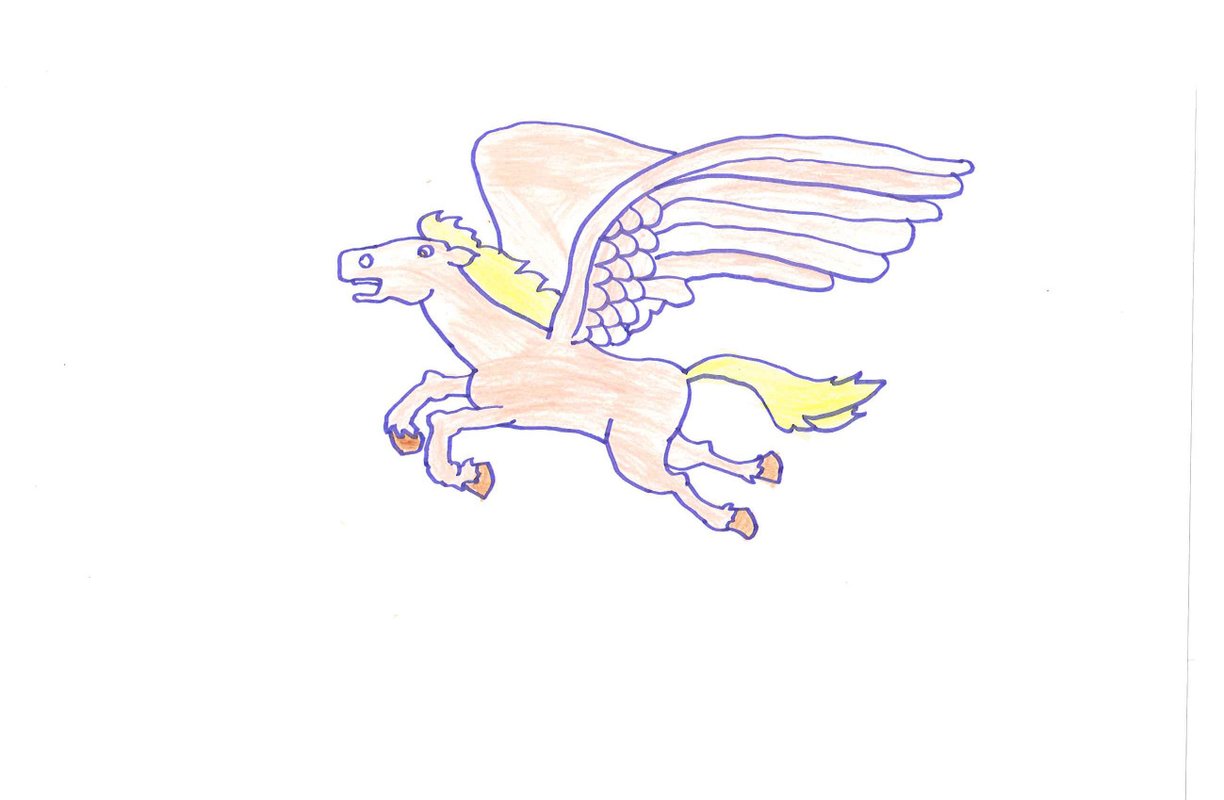
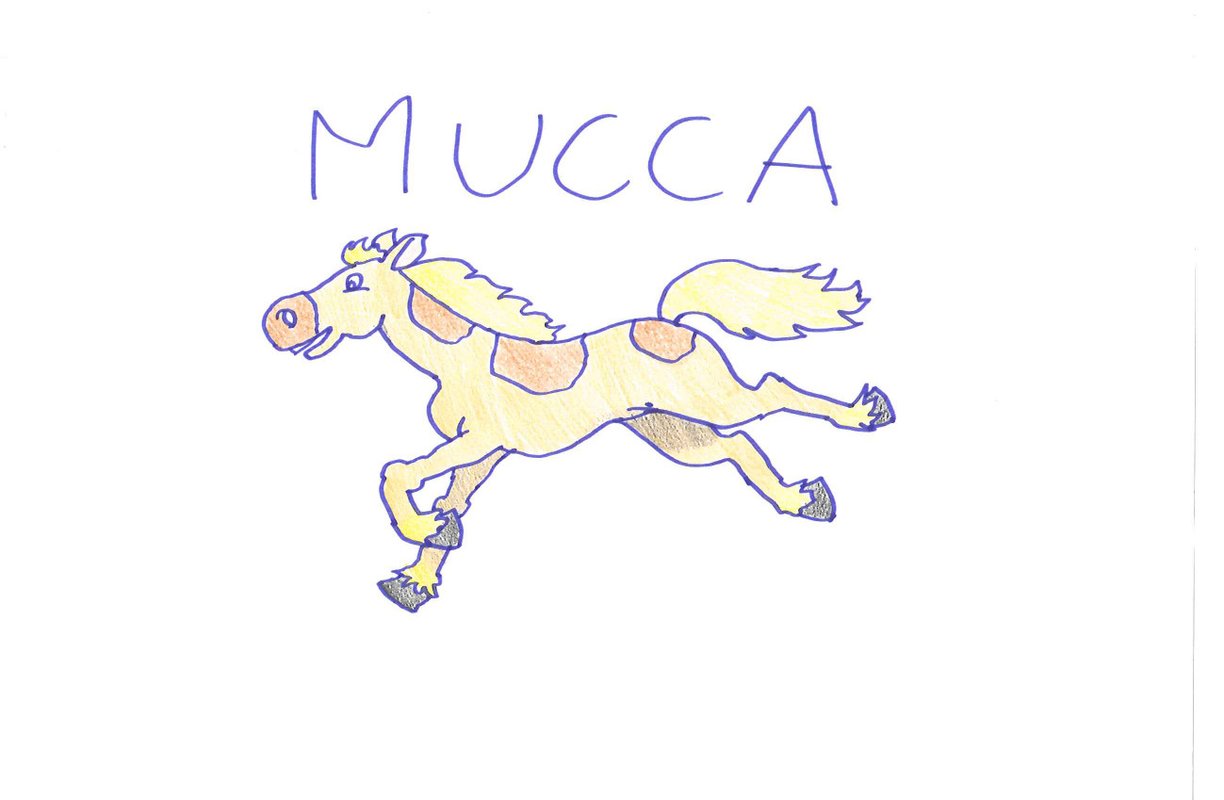
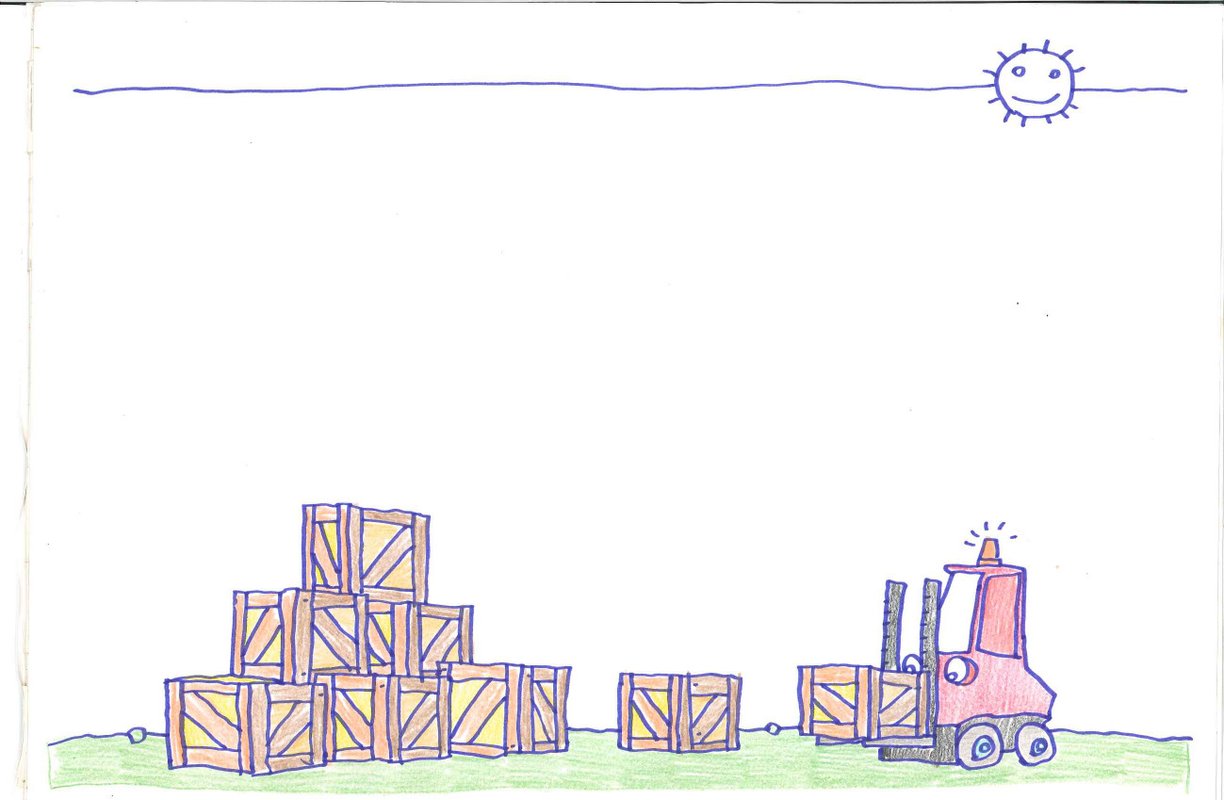
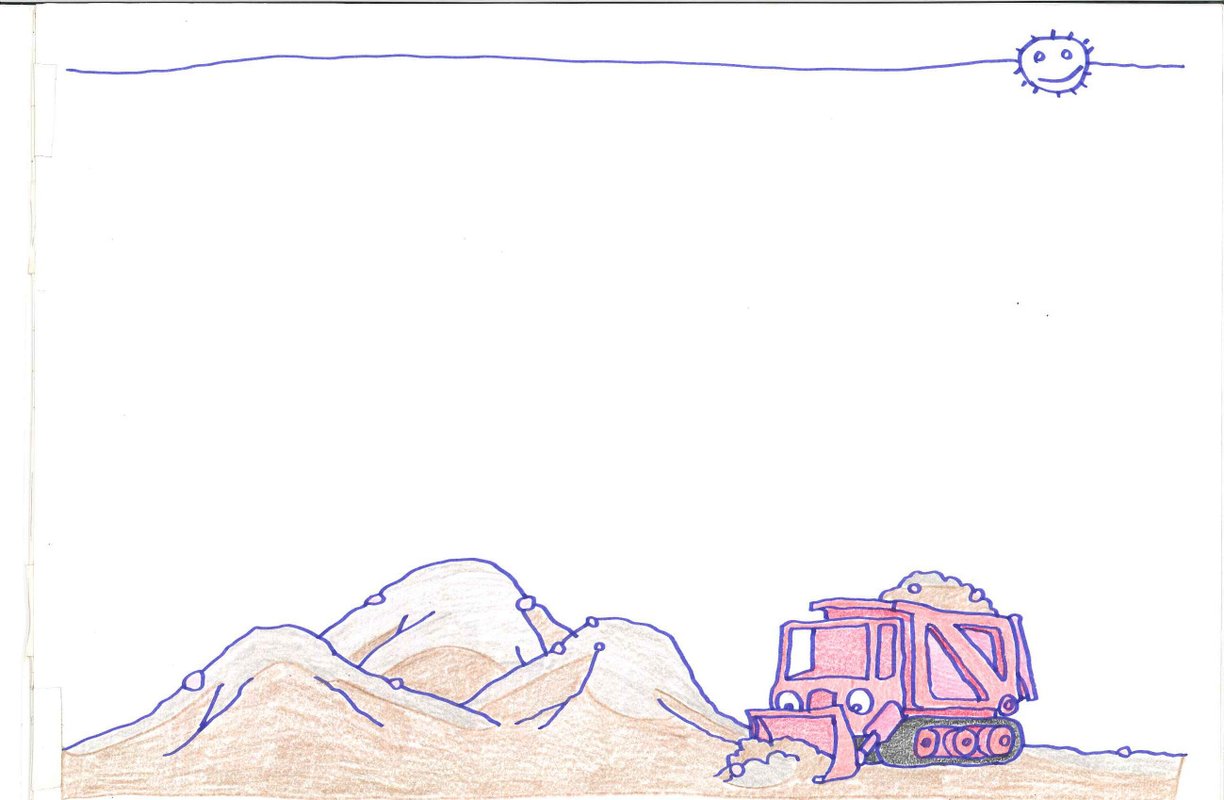
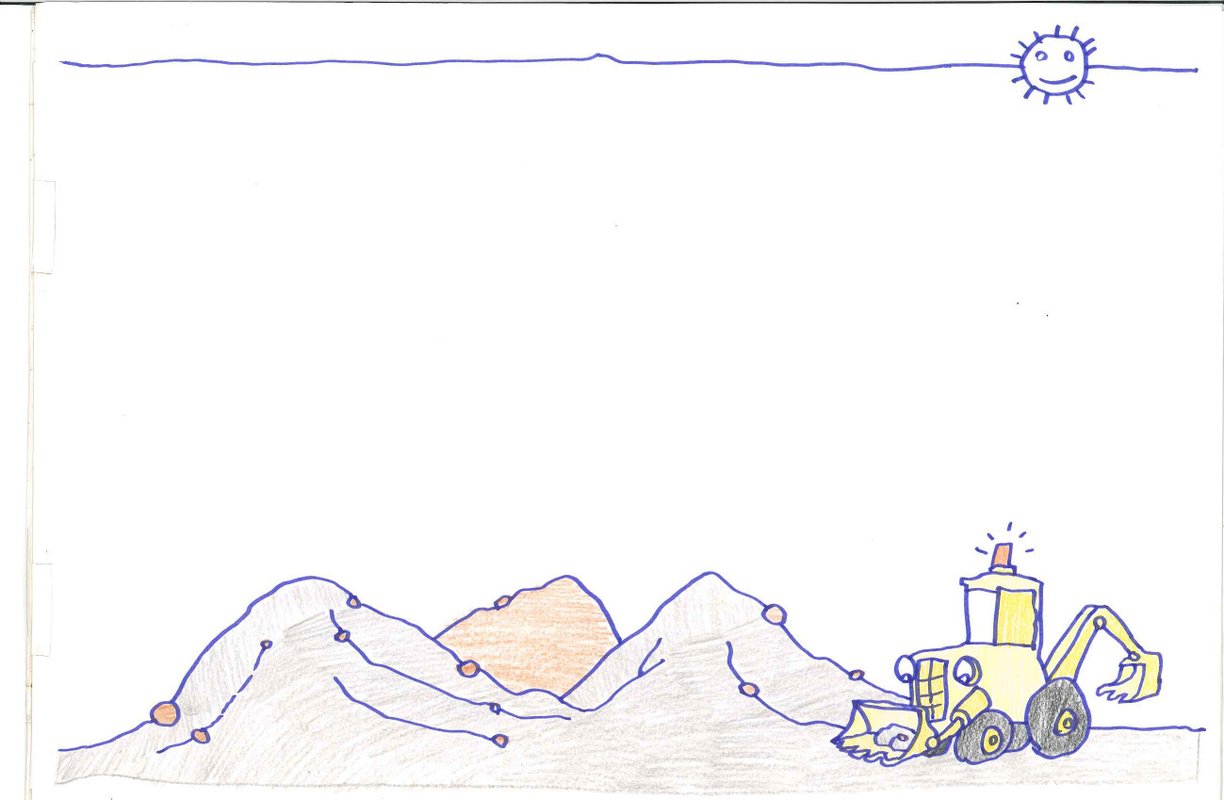
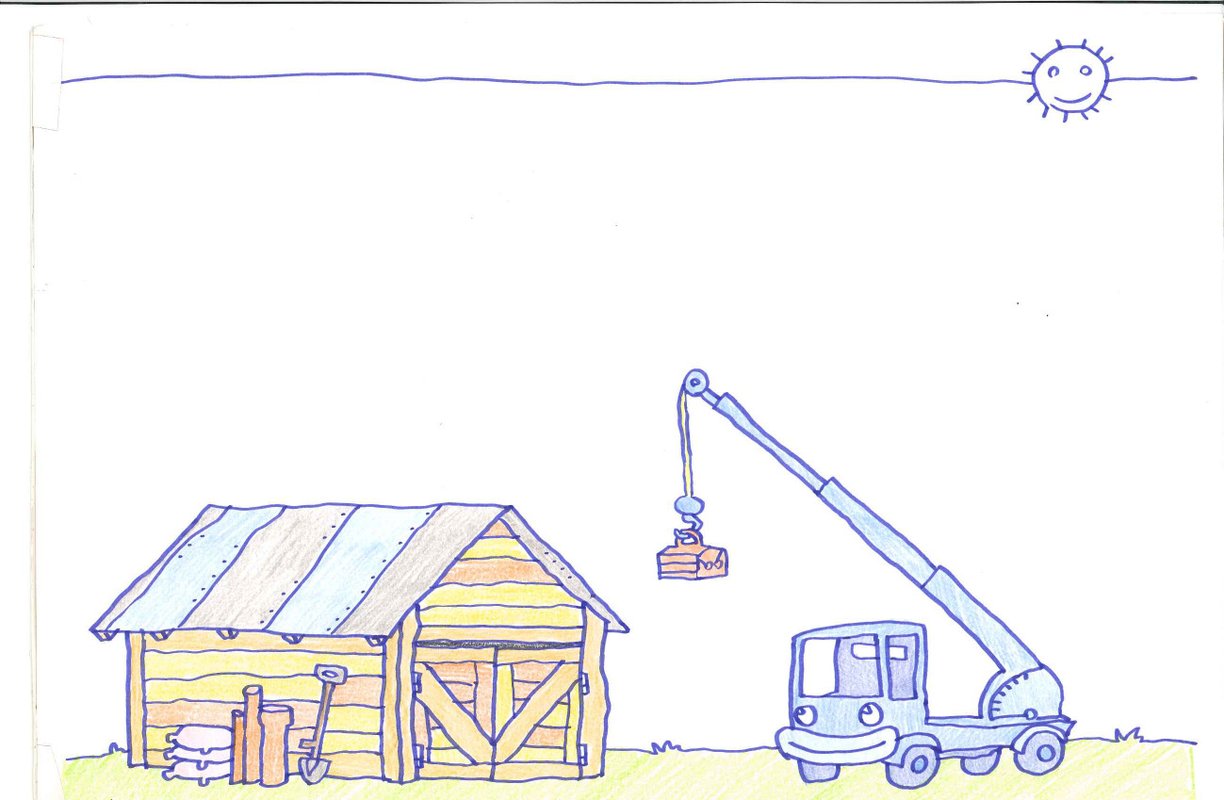
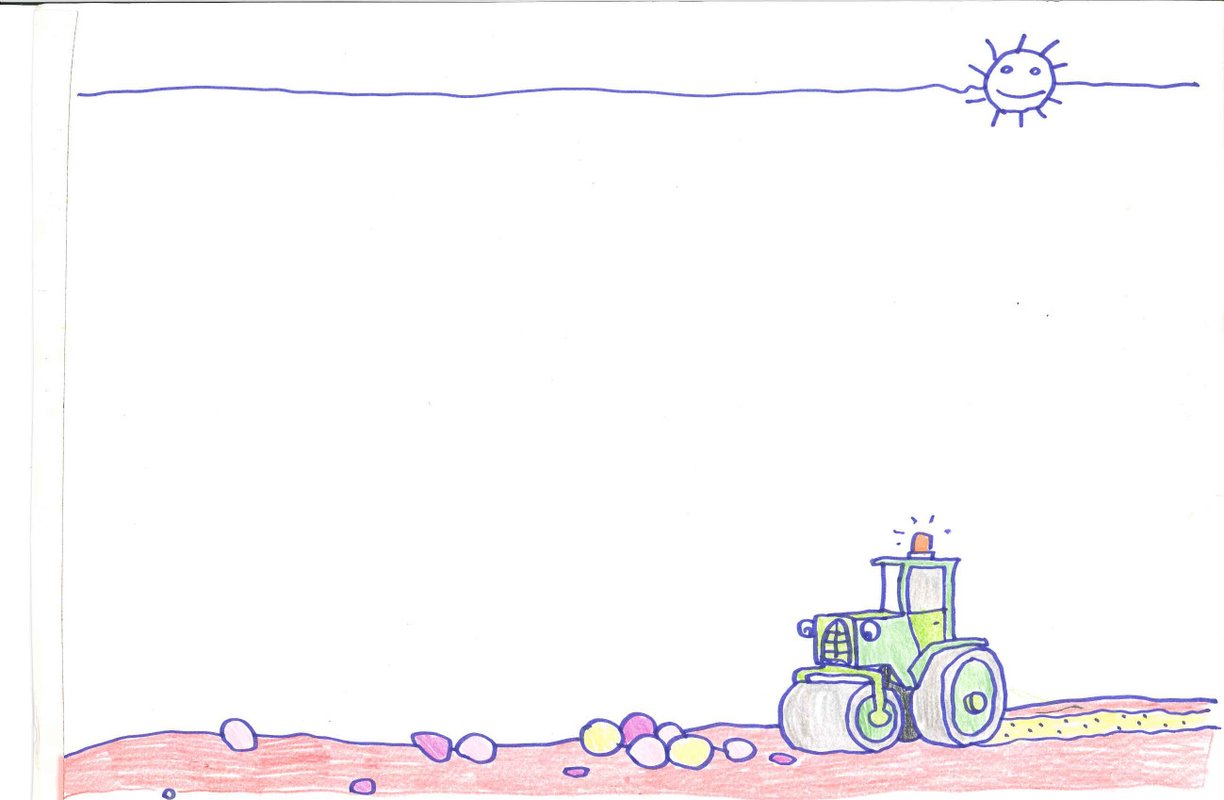
Guardate cosa ho trovato mettendo a posto nella casa al mare dei miei suoceri… – Look what I’ve found by sweeping my in-laws’ beach house…
Fino a qualche estate fa riuscivamo a piazzare i bambini a Tarquinia per un paio di settimane con i nonni, poi nel weekend era l’assalto al genitore: ogni sfizio doveva essere soddisfatto, tipo dormire in tenda in giardino. Ma avevo modo di difendermi, per esempio fuorviando le loro giovani menti (vedi sotto)… – Up to some summers ago, we could leave our sons a couple of weeks with their grandparents. In the weekend it was hunting season for the parents, and anything could go, like sleeping in a tent in the backyard. But I fought back, misleading their young brains… Ciccio era un patito di Bob Aggiustatutto (sic!), aveva tutti i gadget consueti, ma era l’unico ad avere l’album con le cornicette disegnate da Andy War! – My son was fond of Bob the Builder, having all the usual gadgets, but was the only owner of a sketchbook framed by Andy War!
Link to this articleZYMACHI FagoLogo

21 Ago 2013
Un logo semplificato per la serie degli ZYMACHI a forma di fago (virus). Più che altro ne approfitto per sperimentare il tema di default della nuova versione 3.6 di WordPress (TwentyThirteen), che dà più risalto alla formattazione dei post. Nella fattispecie il format “Image” ha un font più piccolo per il titolo, e sposta tutti i metadati a pié di pagina. Link to this articleYour animation is ready!
11 Ago 2013
Hey Jesp, that sweet stop motion animation you made at Museum of the Moving Image is ready to share! You can download the video file or upload it directly to YouTube or Facebook. Follow this link to get started: http://interactive.movingimage.us/pu.php?f=2013_08_11_16_45_46_877-0.mp4&id=5207f99ed2de8&t=Bidone+su+macchina&c=Jesp&k=2 FYI This link expires in 14 days, so don’t wait too long. Link to this articleAndy's Digital Adventures: Hardware
18 Lug 2013
I bought my first used PC from a friend of a friend who lived near the Malagrotta landfill, the largest in Europe.
English text
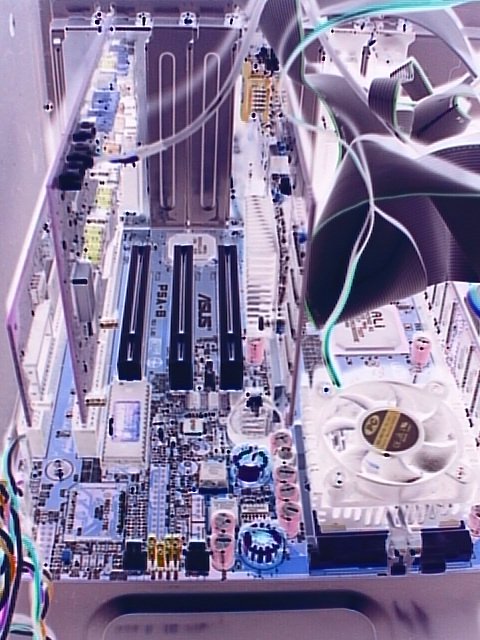
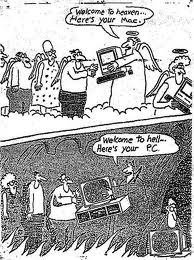
I bought my first used PC from a friend of a friend who lived near the Malagrotta landfill, the largest in Europe. Pretty symbolic, isn't it? It was a 486 that never even made it to the Windows 95 splash screen: I managed to pass it off to the friend of a friend.
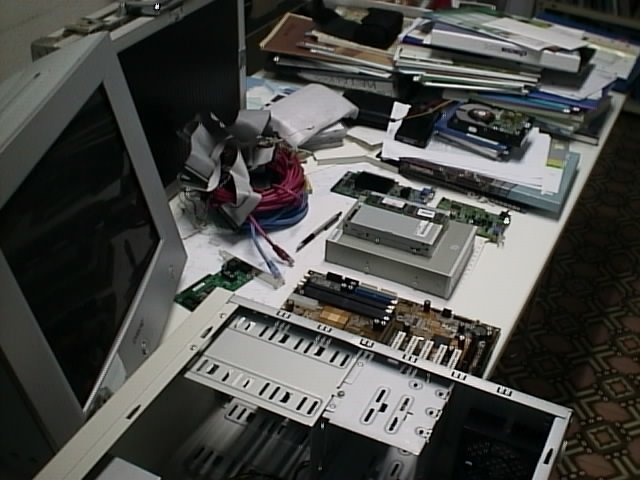
From there on, my desktops were always brand new, assembled according to my needs (and budget). To acquire them, I went to seedy electronics dealers, fortified by a brief introduction by skilled friends of friends. You chose from a concise menu, usually xeroxed in black and white like a flyer from the worst punk band, and divided into three or four tabs: from the "Basic" to the "Deluxe" model, passing through "Performance" and "Professional." At the bottom of the menu was a jumble of additional items, rigorously labeled with geek acronyms. Usually, none of the possible combinations was satisfactory, a bit like with women: either fantastic tits on flat asses or sensational butts under an ironing board. Sexist comments were the norm, as almost all the customers were distinguished by their limp chromosome. But giving up on the prey was impossible; leaving the store without a cabinet on your back would surely have caused a crash in the Taiwan stock market, resulting in a corresponding increase in memory prices.
The assembled product was usually a diabolical jumble of internal conflicts, worse than the italian Democratic Party's boardroom. The graphics card wouldn't communicate with the motherboard, the processor was incompatible, and the hard drive didn't bother. Complicating matters was my antitrust, if not anarchic, spirit: after my first Intel processor, I've always bought AMD for my desktops. I learned the hard way that the K7 motherboard had two controllers, a Northbridge and a Southbridge, and that the Superbypass to eliminate bottlenecks had never reached the production line, leaving retailers "standing in the rain" (as reported in the enlightening Tom's Hardware article). But I didn't give up, and by updating the drivers daily, after a few months, a stable setup was achieved.
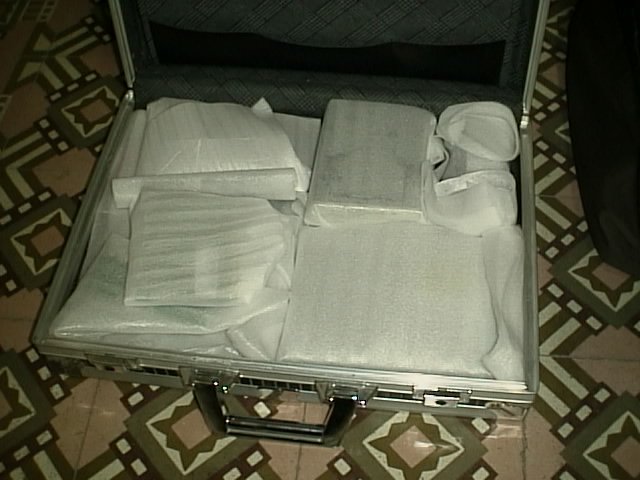
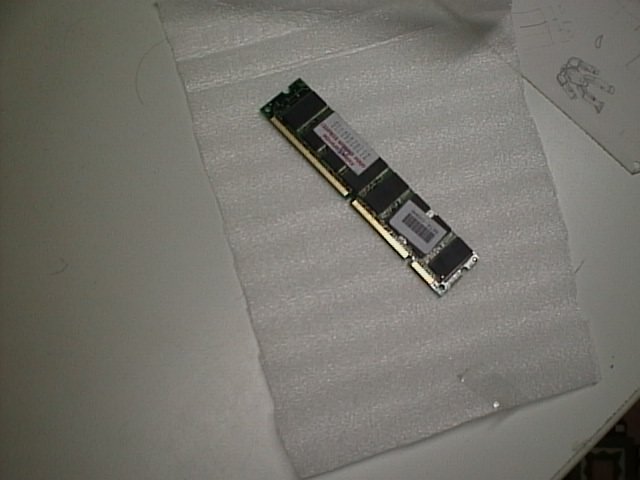
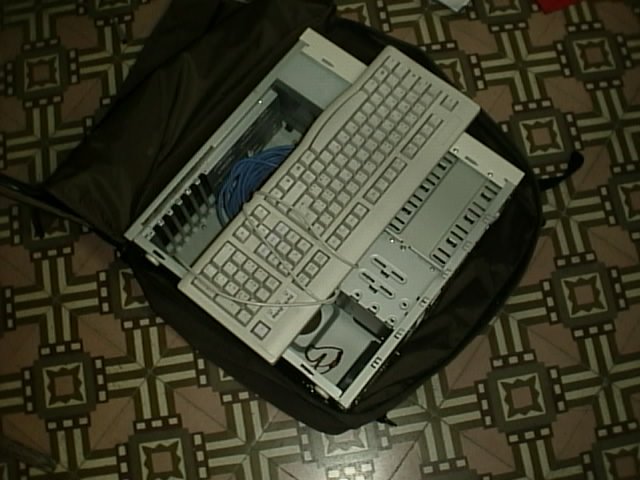
I've been through so much with my K7! Called back for an "emergency" job in Murcia, I dismantled it piece by piece. I stowed all the boards and drives in a briefcase, while I packed the cabinet chassis into a bag, packed with underwear and T-shirts, and sent it into the belly of the plane. It emerged a little battered but functional. Once in the Murcia studio, I rebuilt everything. I was wearing the black suit from my wedding; I must have looked either really cool or a total idiot, I can't tell.
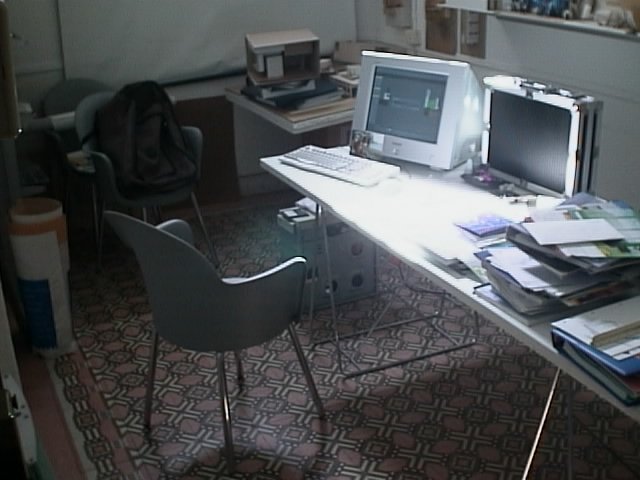
After yet another K7 with an ASUS motherboard (a gem that still does its job at the office), I switched to laptops. My wife would say I was not the man I used to be, but what can I do? Bringing work at home is a pleasure, bringing hobbies at work is a duty.
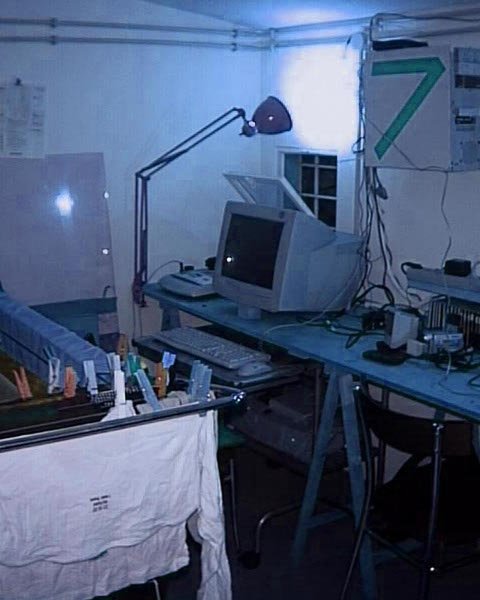
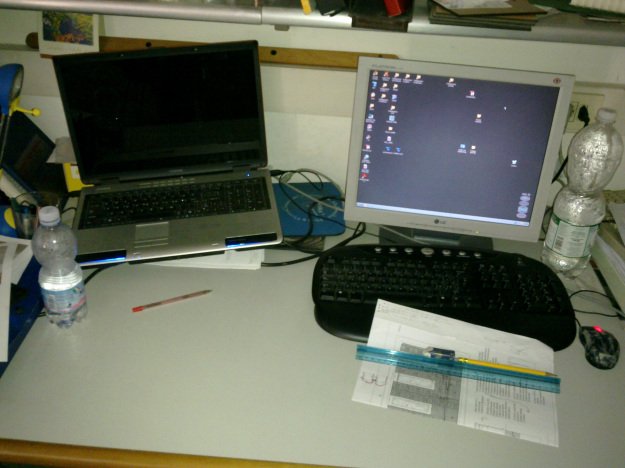
There was a time when my partner and I had the same Toshiba model (cool or idiot, the question always arises). After years of faithful service, mine had a black screen, while his totally collapsed. The technician disassembled his screen and installed it on my laptop. It lasted a couple of years, then went black again. I connected the laptop to an auxiliary screen. The keyboard stopped responding, so I replaced it with a wireless one. With all these prosthetics, it's no longer a "laptop," but it's alive, and fights with us!
Testo in italiano
Il mio primo PC lo comprai usato da un amico di amici che abitava nei pressi della discarica di Malagrotta, la più grande d’Europa. Niente male come simbolismo, vero? Era un 486 che mai giunse a vedere la schermata iniziale di Windows 95, riuscii a sbolognarlo prima ad un amico di amici.
Da allora i miei desktop erano sempre nuovi di pacca, assemblati secondo le esigenze (e la disponibilità economica). Per farli propri si andava da sordidi spacciatori di materiale elettronico, fortificati da una breve infarinatura propinata da amici di amici più versati nel campo. Si sceglieva su uno stringato menu, solitamente fotocopiato in bianco e nero tipo flyer dei peggio punx, e divisi in tre-quattro fincature: si andava dal modello “Basic” al “Deluxe”, passando dal “Performance” e il “Professional”. Sul fondo del menu una accozzaglia di elementi aggiuntivi, rigorosamente etichettati con acronimi da smanettoni. Di solito nessuna delle combinazioni possibili era soddisfacente, un po’ come con le donne: o tette fantastiche su culi piatti o chiappe da urlo sotto una tavola da stiro. I commenti sessisti erano la norma, dato che quasi tutti gli avventori si distinguevano per il cromosoma monco. Ma mollare la preda era impossibile, lasciare il negozio senza un cabinet sulle spalle avrebbe sicuramente provocato un tracollo della borsa di Taiwan, con conseguente aumento del prezzo delle memorie.
Di solito l’assemblato era un diabolico coacervo di conflitti interni, peggio del direttivo del PD. La scheda video non dialogava con la scheda madre, il processore era incompatibile e l’hard disk se ne lavava le mani. A complicare le cose c’era il mio spirito non dico anarchico ma almeno antitrust: dopo un primo processore della Intel, per i miei desktop ho sempre e solo comprato AMD. A mie spese imparai che la mother per il K7 aveva due controller, Northbridge e Southbridge, e che il Superbypass per eliminare i bottlenecks non era mai giunto alla linea di produzione, lasciando i retailers (i venditori) con il culo nell’acqua (“standing in the rain”, come riportato nell’illuminante articolo di Tom’s Hardware). Ma io non demordevo, ed aggiornando i driver a manetta si raggiungeva, dopo qualche mese, un assetto stabile.
Quante ne ho passate col mio K7! richiamato per un lavoro “d’urgenza” a Murcia, lo smontai pezzo pezzo. Tutte le schede e i drive li riposi in una valigetta da cabina, mentre il telaio del cabinet lo misi in valigia, lo stipai di mutande e magliette e lo spedii nella pancia dell’aereo. Ne riemerse un po’ ammaccato ma funzionale. Una volta nello studio murciano, ricostruii il tutto. Indossavo il completo nero con cui mi ero sposato, dovevo sembrare un gran figo o un coglione totale, non so valutare.
Dopo l’ennesimo K7 su scheda madre ASUS (un gioiellino che ancora fa il suo dovere a studio) sono passato ai portatili. Mi sono arrecchionuto, direbbe mia moglie, ma che ci posso fare, portarsi il lavoro a casa è un piacere, portarsi i passatempi a studio un dovere. C’è stato un momento in cui io e il mio socio avevamo lo stesso modello di Toshiba (fighi o coglioni, la domanda è sempre quella). Dopo anni di onorato servizio al mio parte lo schermo, mentre il suo ci abbandona del tutto. Sagacemente il tecnico smonta il suo schermo e lo monta sul mio. Dura un paio d’anni, poi si spegne anche lui. Collego il laptop ad uno schermo ausiliario. La tastiera non risponde più, la sostituisco con una wireless. Con tutte queste protesi non è più un “portatile”, ma è vivo, e lotta insieme a noi!
Here you can find related articles: Digital Adventures
Made of Atoms
16 Lug 2013
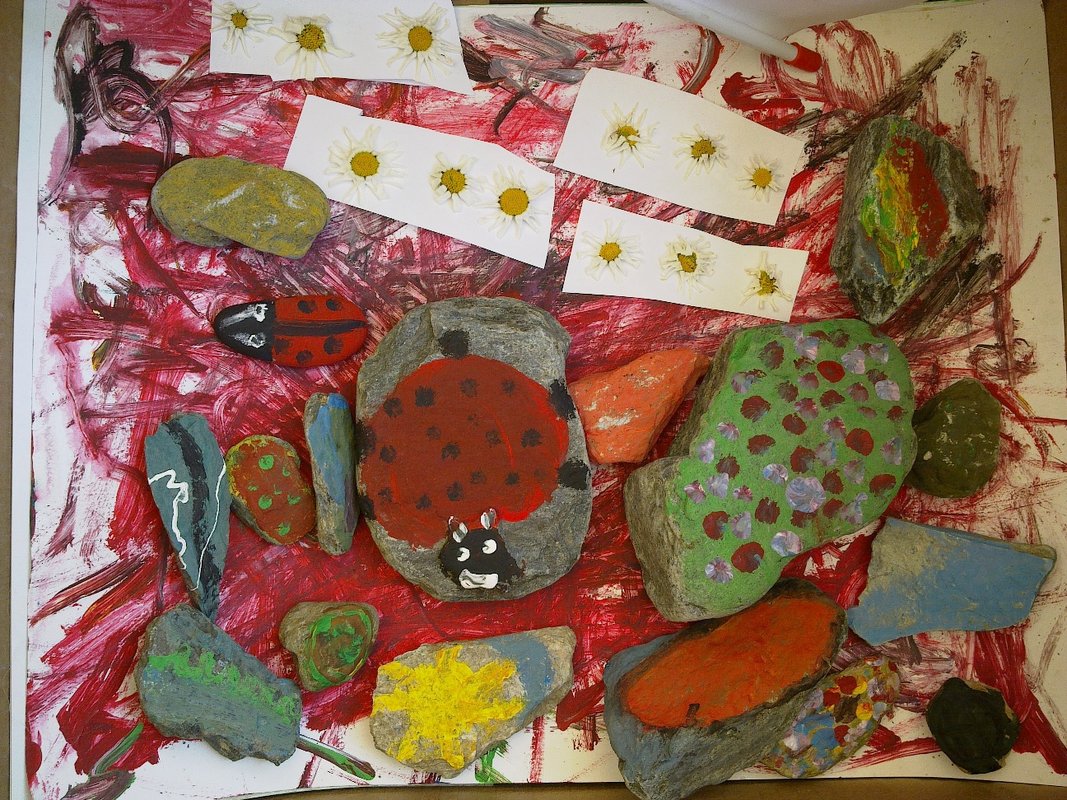
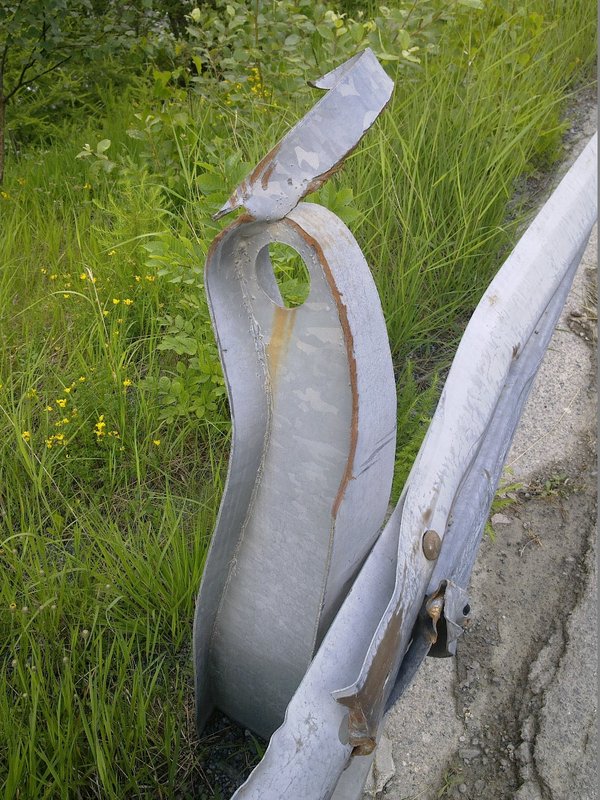
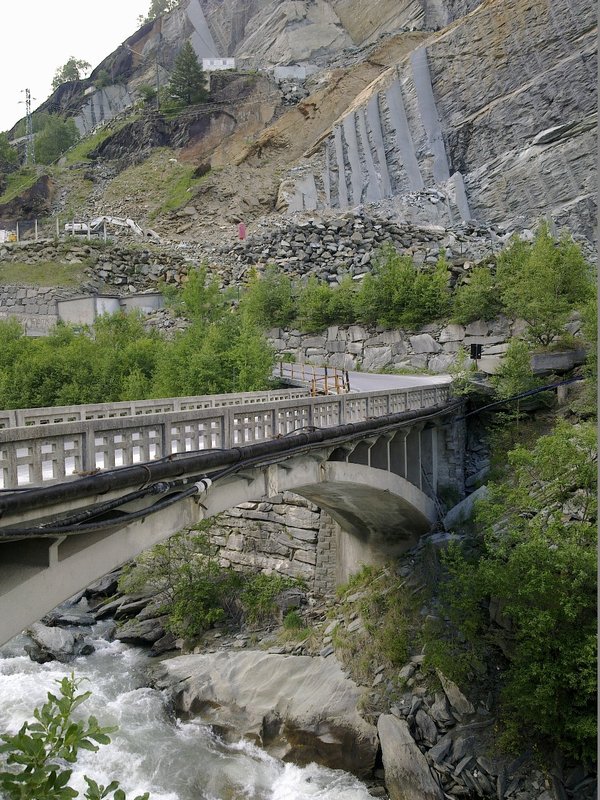
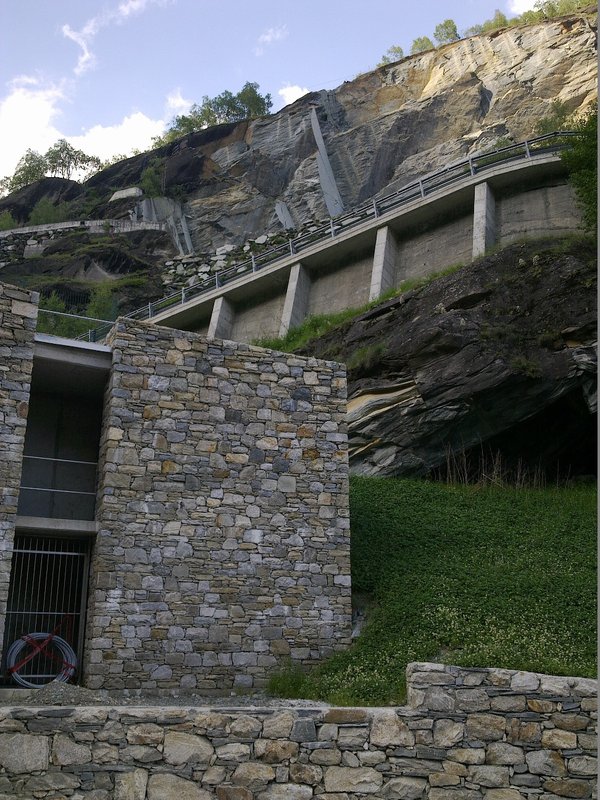
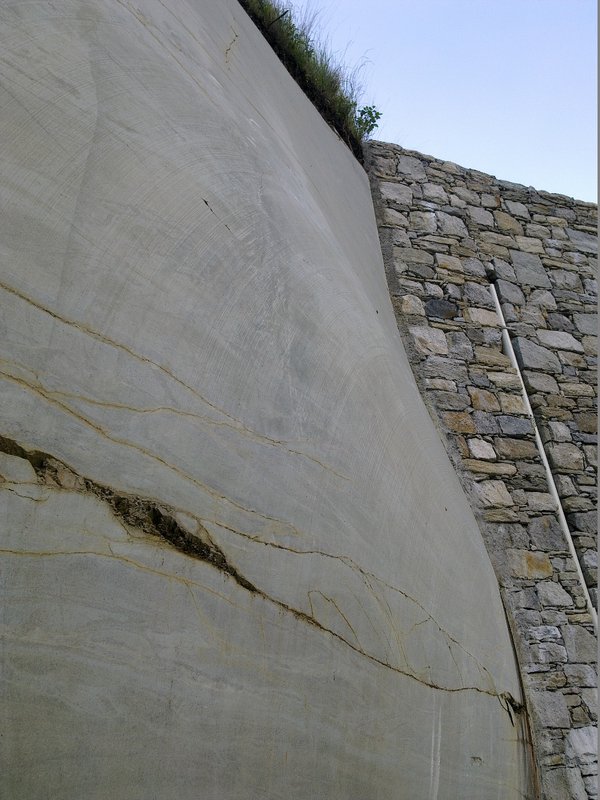
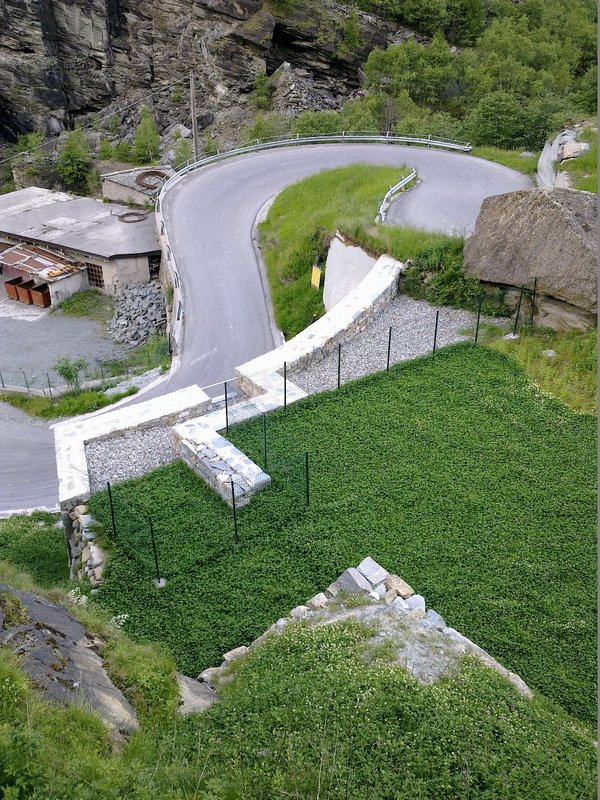
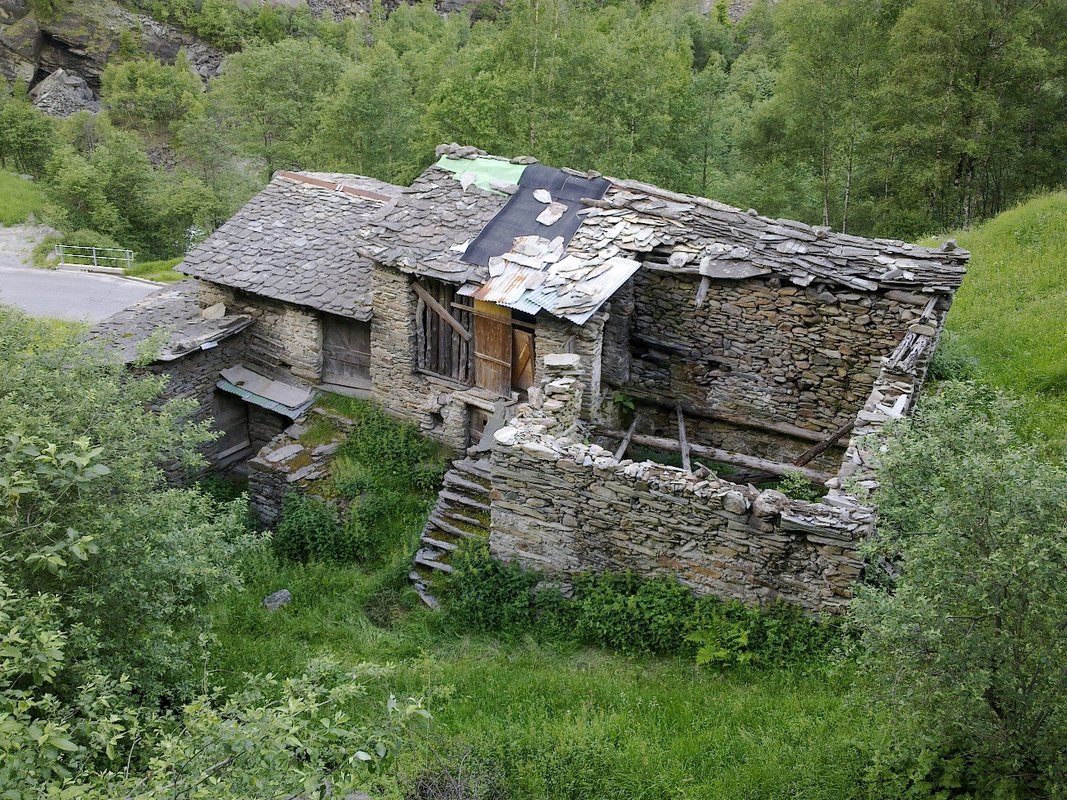
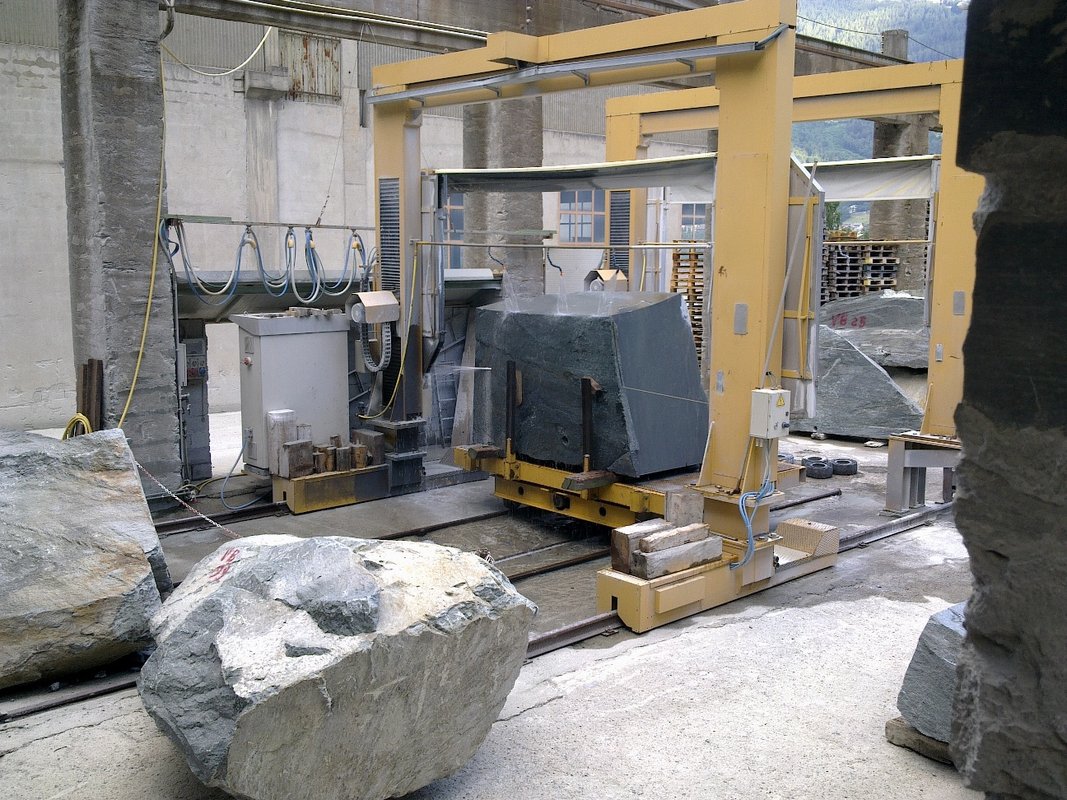
A conti fatti mi considero un solitario/contemplativo, definizione che potrebbe applicarsi anche a chi pratica onanismo guardando dal buco della serratura, ma che io intendo piuttosto come uno che adotta una certa forma di meditazione. Oggetto della contemplazione è normalmente un paesaggio, inteso come spazio in cui accadono cose. Naturali o urbani, mappe o formicai, quadri o corpi femminili, siamo circondati da paesaggi. Il modo migliore per gustarli è quello di camminare senza una meta precisa, il paesaggio verrà a voi prima ancora che lo raggiungiate. Nelle foto che seguono un esempio: le ho scattate sulla strada che da Chiesa in Valmalenco sale a S. Giuseppe. Notate la ricorrenza di alcune forme (linee dritte e curve) e materiali. Guardate per esempio il serpentino, di cui ci sono abbondanti cave, come si presenta in taglie diverse. Avevo già percorso questa strada qualche anno fa, d’inverno. La stessa sostanza che allora attutiva i rumori in forma di cristalli, ora scroscia fragorosa nel letto del torrente. Fatto di atomi, è questo il mondo che mi piace. Ne approfitto per aggiornare il mio diario podistico. Il 13 giugno 10km, stretching e recupero. Il 17 e il 20 solo 8km. Il 22 cinquanta minuti su una pista ciclabile fatta di saliscendi proprio a Chiesa. 8km, stretching e recupero tre giorni dopo. Il 27 e 29 i km diventano 10. Lo stesso giorno ad Orvieto, mio fratello Ugo arriva primo nei 1500 del campionato italiano master, categoria over 50! Ho notato che è difficile contemplare in corsa: il massimo che potete fare, se il debito di ossigeno ve lo consente, è di meditare introspettivamente, tenendo acceso un pilota automatico che vi impedisca di inciampare…
Link to this articleAndy's Digital Adventures: DOS
09 Lug 2013
To do some calculations, I needed to type "C:/", and for someone coming from the paradise of WYSIWYG, tackling DOS was a bit like taking Dante's journey backwards...
English text
Professor: "I'd like to propose a thesis on the crushing of the base of tanks under seismic action..."
Student: "I... actually... was thinking of something more poetic, ductile sculptures that bear witness to the wounds inflicted by earthquakes on their bodies..."
Professor: "(Who the fuck sent me this...)"
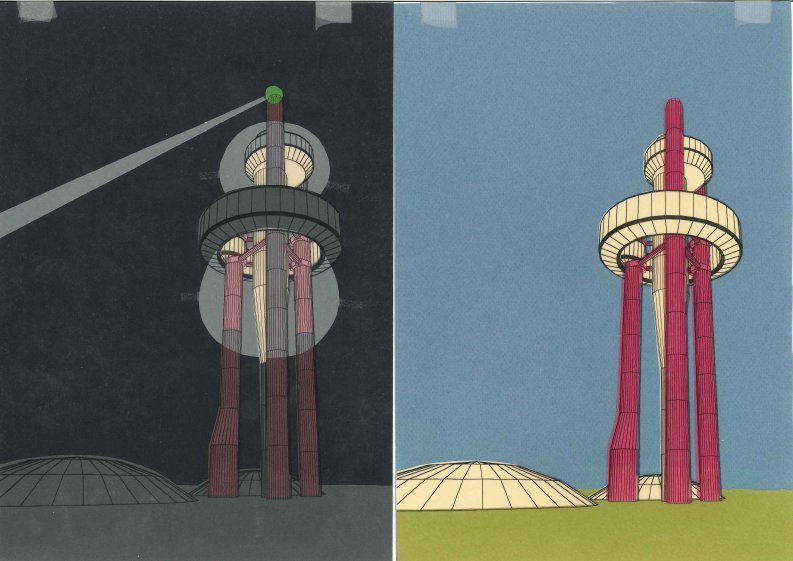
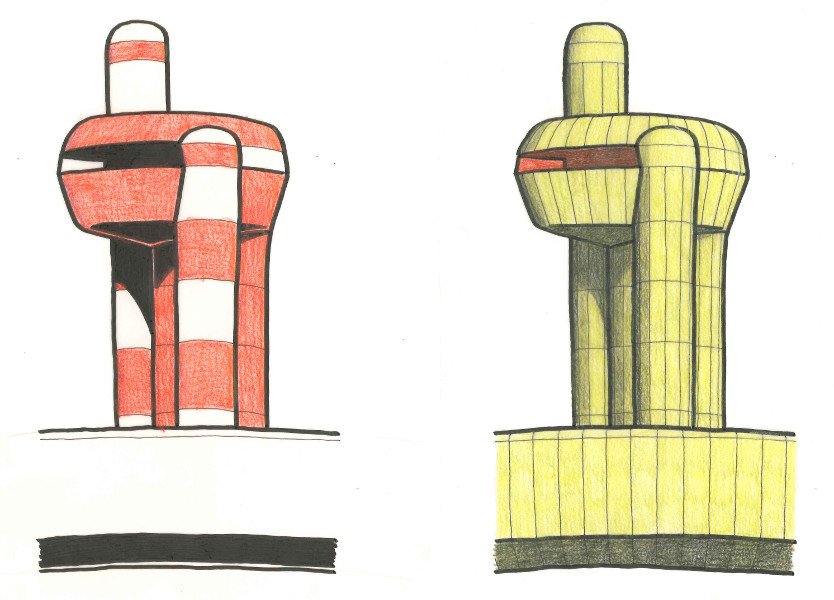
In the end, Professor Pinto and I agreed on a raised tank subjected to wind action, but to do the calculations, I needed to type "C:/", and for someone coming from the paradise of WYSIWYG, tackling DOS was a bit like taking Dante's journey backwards, with Sisyphus' boulder wedged between my horns.
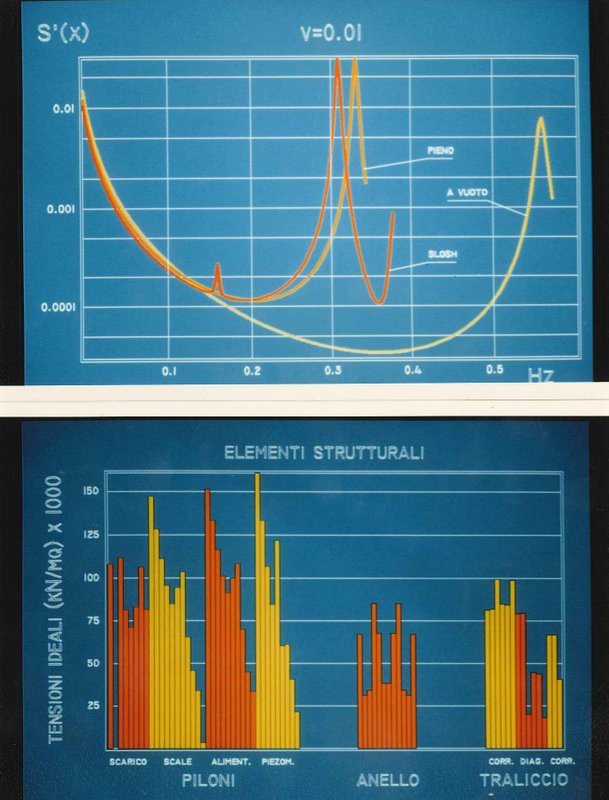
SAP, a structural finite element program, is really cool. Back then, for some reason that undoubtedly had something to do with psychiatric engineering, the input phase was as unfriendly as possible. If you could unravel the orientation of moments of inertia and scale factors to the fourth power, the satisfaction was immense: tons of colorful graphs described the life, death, and miracles of structures otherwise (to me) unknowable. The intrinsic modes of vibration were animated; I watched them oscillate for hours, and it mattered little that, carefully reading the printouts, the roof beams almost touched the basement floor under every load condition. But you know, "mud in, mud out"—reams of printouts can't beat what a good engineer writes on the back of an envelope. Are there still engineers who write on the back of an envelope?
At the same time, I decided to tackle the AutoCAD juggernaut. It was version 12, and I bought a 1,067-page hardcover manual written in 4-point type. I started with the colophon and went straight to the word "end," exercises included. DIMASSOC, DISPSILH, ATTREDEF, the obscure CAD scriptbook unfolded before me in all its cacophony. No icons to click, commands were typed, or rather, the shortcut was typed. But why is the shortcut REC and not RT for drawing a rectangle (RECTANGLE)? Look at the keyboard! And for taking a measurement (DIST)? Why do I have to play the piano with DI when D and S are right there next to each other?
But these are subtleties, because in the meantime, that hatch won't fill even if you kill yourself, the little drawing of the tractor imported from another file has transformed into a girl playing badminton, with an insertion point on Mars and a flirtatious name starting with A$, that ingenious system of nested external references is crashing every computer in the studio, even those not on the network. Printing in AutoCAD is practically an oxymoron. And yet, as you may have guessed, it's a program I love. Each of my layers begins with three digits. I dimension exclusively in paper space. I only have one plot style, and it's called STANDARD.
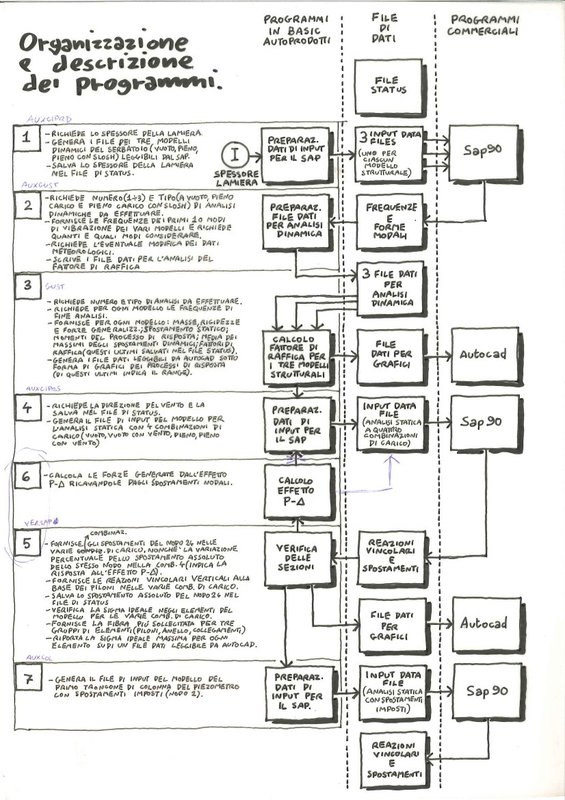
For my thesis, I made AutoCAD and SAP interact using BASIC. The SAP printouts were processed by a small program and transformed into an AutoCAD script. At a glance, I could see which of dozens of structural elements was the most stressed. Another small program transformed output into input, simulating second-order effects (such as P-delta, for example) not yet implemented in SAP90.
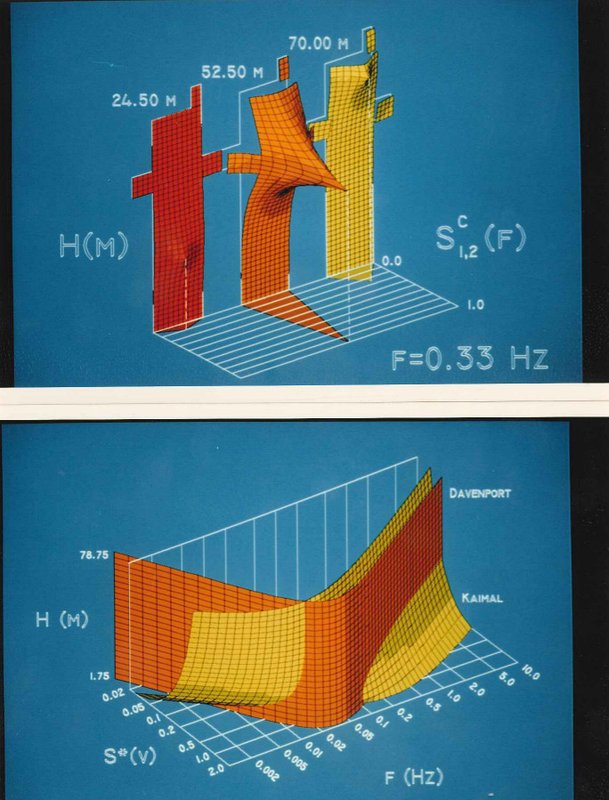
The very core of my thesis was a BASIC program: the wind is a set of infinite vortices at different scales. For each scale, I calculated the correlation between one point and another on the tank's surface. The result was a stochastic correlation field, a strange beast that served me little purpose in the years that followed, given that I worked on completely different subjects...
Testo in italiano
Professore: “Le propongo una tesi sullo schiacciamento del piede dei serbatoi sotto l’azione sismica…”
Studente: “Io… veramente… pensavo a qualcosa di più poetico, delle sculture duttili che testimoniano sul proprio corpo le ferite infertegli dai terremoti…”
Professore: “(Ma chi cazzo me l’ha mandato questo…)”
Alla fine io e il professor Pinto ci mettemmo d’accordo per un serbatoio sopraelevato sottoposto all’azione eolica, ma per fare i calcoli avevo bisogno di digitare “C:/”, e per uno che veniva dal paradiso del WYSIWYG, affrontare il DOS era un po’ come fare il viaggio di Dante a ritroso, col masso di Sisifo incastrato fra le corna.
Il SAP, programma strutturale agli elementi finiti, è fichissimo. All’epoca, per qualche motivo che ha sicuramente a vedere con l’ingegneria psichiatrica, la fase di input era il più unfriendly possibile. Se riuscivi a districarti nell’orientamento dei momenti d’inerzia e nei fattori di scala alla quarta potenza, la soddisfazione era immensa: quintali di grafici colorati descrivevano vita, morte e miracoli di strutture altrimenti (per me) inconoscibili. I modi propri di vibrazione erano animati, li guardavo oscillare per ore, e poco importava che, leggendo attentamente i tabulati, le travi di copertura sfiorassero il pavimento dell’interrato sotto ogni condizione di carico. Ma si sa, “mud in, mud out”, risme di tabulati non possono battere ciò che un buon ingegnere scrive sul retro di una busta (“on the back of an envelope”). Ma esistono ancora ingegneri che scrivono sul retro di una busta?
Contemporaneamente decisi di affrontare il moloch AutoCAD. Si era alla versione 12, comprai un manuale di 1067 pagine con copertina rigida scritto in corpo 4. Cominciai dal colofon e proseguii dritto alla parola fine, esercizi compresi. DIMASSOC, DISPSILH, ATTREDEF, l’oscuro sillabario caddista mi si dispiegava in tutta la sua cacofonia. Niente icone da cliccare, i comandi si digitavano, o meglio, si digitava lo shortcut. Ma perché per disegnare un rettangolo (RECTANGLE) lo shortcut è REC e non RT? Guardate la tastiera! E per prendere una misura (DIST)? Perché devo fare il pianista con DI quando D ed S sono lì una a fianco all’altra?
Ma queste sono sottigliezze, perchè intanto quella campitura non si riempie manco se ti ammazzi, il disegnino del trattore importato da un altro file mi si è trasformato in una ragazza che gioca a volano, ha un punto di inserzione su Marte ed un nome civettuolo che comincia con A$, quell’ingegnoso sistema di riferimenti esterni annidati blocca tutti i computer dello studio, pure quelli non in rete. Stampare in AutoCAD, praticamente un ossimoro. Eppure, come avrete intuito, è un programma che amo. Ogni mio layer comincia con tre cifre. Quoto esclusivamente in spazio carta. Ho solo un plot style e si chiama STANDARD.
In occasione della tesi feci interagire AutoCAD e SAP tramite il BASIC. I tabulati del SAP venivano macinati da un programmino e trasformati in uno script per AutoCAD. A colpo d’occhio potevo vedere quale tra decine di elementi strutturali era il più sollecitato. Un altro programmino mi trasformava output in input, simulando effetti del secondo ordine (tipo P-delta, per intenderci) ancora non implementati nel SAP90.
Il cuore (core) stesso della tesi era un programma in BASIC: il vento è un insieme di infiniti vortici a scale diverse. Per ogni scala calcolavo la correlazione tra un punto e l’altro della superficie del serbatoio. Il risultato era un campo stocastico di correlazione, una strana bestia che ben poco mi è servita negli anni a seguire, dato che mi sono occupato di tutt’altro…
Here you can find related articles: Digital Adventures